

Networks used to break quietly. A congested link, a misconfigured router, a sudden traffic spike — and somewhere, a network engineer would get paged at 2 a.m. That picture is changing fast. Adaptive network control has moved from research labs into real-world infrastructure, and the difference it makes is hard to overstate.
Adaptive network control is an advanced concept within computer networking that focuses on dynamically managing and optimizing network behavior based on changing conditions. That definition sounds clean on paper. In practice, it means a network that watches itself, adjusts itself, and — in many cases — fixes itself before anyone even knows something was wrong.
As of 2026, this shift is accelerating. The sheer volume of connected devices, cloud workloads, and real-time applications has made static network configurations close to unworkable. Something had to give. Adaptive control is what replaced the old model.
What Adaptive Network Control Actually Does

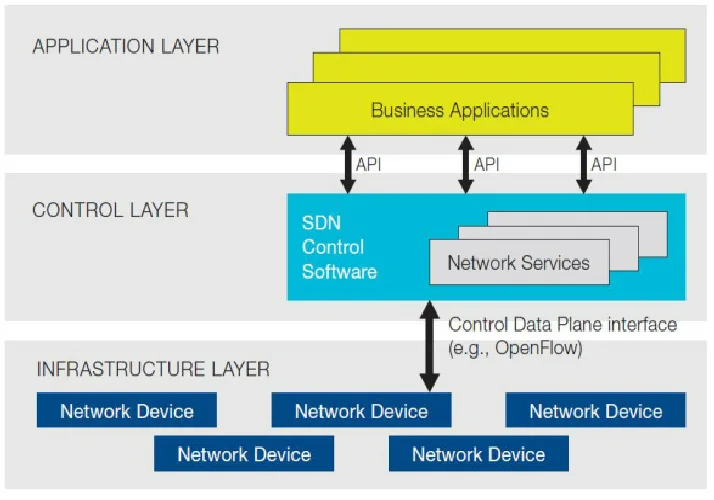
Seth Terashima (Tetra7 (talk)), CC BY-SA 3.0, via Wikimedia Commons
Think of a traditional network like a highway system with fixed speed limits, no traffic sensors, and no dynamic lane changes. It works fine on a quiet Tuesday morning. Rush hour? Gridlock.
Adaptive network control is a method of managing a network where the system automatically adjusts its operations based on current conditions — the network can “sense” what’s happening and respond without manual intervention.
The key word is automatically. The system isn’t waiting for a human to spot the problem and push a fix. It reads real-time data — traffic load, latency spikes, security anomalies, bandwidth availability — and makes configuration changes on the fly.
An adaptive network blends several advanced technologies into one cohesive system: constant data collection fuels smarter decisions and faster reactions, instead of waiting for manual changes rules execute themselves based on conditions, APIs and SDN (Software-Defined Networking) keep networks flexible, and algorithms learn from patterns enabling prediction and proactive optimization.
That last part is the piece that makes this genuinely different from older automation. It’s not just “if traffic exceeds threshold, reroute.” It’s a system that learns what normal looks like, detects deviations early, and anticipates problems before they compound.
The Technology Stack Behind Adaptive Network Control
Three layers of technology make adaptive network control work in production environments. Understanding each one helps make sense of why this approach is more resilient than what came before.
Machine learning and AI at the core. AI and machine learning are integral to adaptive network control. Machine learning models can identify patterns in network behavior and predict potential issues before they occur, while AI can automate complex tasks, reducing the need for manual intervention and minimizing the risk of human error.
Software-Defined Networking (SDN) as the control layer. SDN handles the control layer. It separates the logic that decides how traffic moves from the hardware that actually moves it — which means real-time reconfiguration becomes genuinely fast rather than a maintenance window event.
Feedback loops and continuous monitoring. At its heart, adaptive network control leverages feedback loops and machine learning to monitor and respond to changes. Key principles include autonomy — where networks self-heal without human intervention — scalability to handle exponential data growth, and interoperability across heterogeneous devices.
Together, these three layers create a system where monitoring, decision-making, and action all happen within the same continuous cycle rather than across siloed teams and manual processes.
Where Adaptive Network Control Is Being Used Right Now
This isn’t purely theoretical. Organisations across multiple sectors have deployed adaptive network control at scale, and the results are measurable.
Telecommunications and 5G. This is where some of the clearest performance gains show up. Verizon implemented adaptive controls in its 5G core network in 2025, using AI to dynamically manage spectrum allocation, resulting in a 25% improvement in throughput during peak hours. The system adapted to urban congestion by rerouting traffic, serving over 100 million users.
Healthcare. Hospital networks can’t afford moments of packet loss during telemedicine consultations or surgical robotics. In hospitals, adaptive networks ensure uninterrupted telemedicine. The stakes here make the investment straightforward — downtime isn’t just expensive, it’s clinically dangerous.
Cloud computing. In cloud computing, adaptive network control helps manage resource allocation and ensure efficient data transfer between servers. With workloads constantly shifting between on-premises, multi-cloud, and edge environments, a static configuration becomes a liability almost immediately.
Enterprise security. Adaptive network control protocols operate across multiple layers of network architecture, incorporating machine learning algorithms, behavioral analysis, and real-time threat intelligence to automatically adjust security policies and network configurations. The technology has matured significantly, with implementations ranging from software-defined networking (SDN) controllers to AI-driven security orchestration platforms.
North America and Europe lead in enterprise adoption, particularly in financial services and healthcare sectors where regulatory compliance drives investment in advanced security technologies.
What the Research Shows
The network control and automation sector is growing at a pace that reflects genuine enterprise urgency. The network automation market stands at USD 31.02 billion in 2025 and is forecast to hit USD 84.69 billion by 2030. Adaptive control mechanisms are a core driver of that expansion — not peripheral to it.
On the access control side, the Network Access Control market reached USD 5.19 billion in 2025 and is projected to hit USD 14.72 billion by 2030 at a 23.2% CAGR, with zero-trust architecture adoption, the surge of unmanaged and IoT endpoints, and the normalisation of hybrid work accelerating demand.
What these numbers capture is less about technology novelty and more about necessity. Professionals managing hybrid infrastructure — dozens of cloud services, thousands of endpoints, remote workers on every continent — consistently describe adaptive controls not as an upgrade but as a prerequisite. Static configuration simply can’t keep up with the pace of change in modern networks.
The Real Challenges With Adaptive Network Control
Getting this right isn’t trivial. Anyone who has worked in enterprise networking knows the distance between a promising pilot and a stable production rollout.
A 2026 Deloitte survey found 22% of adopters faced integration issues, delaying ROI. That’s a meaningful chunk. Legacy infrastructure is the usual culprit — older network hardware wasn’t designed to work with adaptive control layers, and retrofitting creates friction.
Older network infrastructure may not support adaptive technologies easily, and understanding the difference between adaptive and traditional approaches highlights why this shift requires careful planning.
Privacy and compliance are a second friction point. Privacy concerns arise from continuous monitoring, necessitating robust compliance with GDPR and CCPA. A system that watches every packet in real time has access to a lot of data. Governance frameworks need to be in place before deployment, not after.
And then there’s the skills gap. Adaptive network control sits at the intersection of networking, data science, and security operations. Finding engineers who are strong in all three is genuinely hard in 2026’s job market. Most organisations are solving this through targeted upskilling rather than pure hiring.
None of these challenges make adaptive control impractical. But they do mean the transition requires a phased approach rather than a wholesale switch overnight.
How to Implement Adaptive Network Control Without Breaking Everything
The organisations that have made this transition successfully tend to follow a similar pattern. It isn’t one giant cutover — it’s a sequence of controlled steps.
If you’re planning to implement adaptive network control, consider these steps: using SDN can make it easier to manage and update the network; accurate and timely data is critical for effective decision-making; ensure that automated systems are protected against threats; and start with smaller segments of the network before scaling up.
Anyone who has managed a mid-scale network migration knows the temptation to move fast. The organisations that avoid costly rollbacks typically run a parallel monitoring phase first — letting the adaptive system observe traffic patterns for two to four weeks before it’s given any active control. That observation window is where the model learns what “normal” actually looks like in that specific environment. Skipping it is the single most common reason early deployments underperform.
That last point is the one that saves the most pain. Starting with a single application tier or a non-critical network segment gives engineers time to understand how the adaptive system behaves, tune its policies, and build confidence before rolling out to business-critical infrastructure.
Data quality matters enormously here. Adaptive systems are only as good as the telemetry they receive. If the monitoring data is incomplete or delayed, the control layer makes decisions based on a flawed picture. Investing in observability infrastructure before deploying adaptive control pays off quickly.
What’s Coming Next for Adaptive Network Control
Looking ahead from 2026, adaptive network control will integrate quantum computing and neuromorphic chips for ultra-fast decisions. Trends point to federated learning for privacy-preserving adaptations across edges.
Federated learning is worth unpacking. It allows different parts of a distributed network to collectively improve a shared model without any single node needing access to all the data. For enterprises managing networks across multiple regulatory jurisdictions, that’s a practical solution to a real compliance headache.
The convergence of zero trust, AI analytics, and platform integration will redefine how enterprises enforce access and respond to threats. The ability to deliver modular, context-aware controls will differentiate market leaders.
The direction is clear: networks will become more self-aware and less dependent on human configuration at every layer. That won’t eliminate network engineers — it will change what they spend their time on, shifting from reactive firefighting toward architectural decision-making and policy governance.
FAQs
What’s the difference between adaptive network control and traditional network automation?
Traditional automation follows fixed rules — “if X happens, do Y.” Adaptive network control uses machine learning to update those rules continuously based on observed outcomes. It’s the difference between a thermostat and a smart heating system that learns your schedule.
Do you need to replace existing hardware to use adaptive network control?
Not always. SDN software layers and control plane tools can sit on top of existing hardware in many cases, though older equipment may limit how much adaptability is achievable. A phased assessment of current infrastructure is usually the first step.
Is adaptive network control the same as SD-WAN?
SD-WAN is one application of adaptive networking principles, focused specifically on wide-area network management. Adaptive network control is the broader concept that encompasses SD-WAN, adaptive security, dynamic QoS, and self-healing mechanisms across all network layers.
How does adaptive network control handle cybersecurity threats?
It uses behavioral analysis to establish what normal traffic patterns look like, then automatically flags or blocks anomalous activity. Threat response policies can adjust in real time — isolating compromised segments or rerouting traffic around suspected intrusion points without waiting for human intervention.
Is adaptive network control suitable for smaller organisations?
Increasingly, yes. Cloud-delivered NAC and SDN services have made adaptive control accessible without the capital expense of large hardware deployments. Many managed service providers now offer adaptive networking as part of their standard package for mid-sized businesses.
