
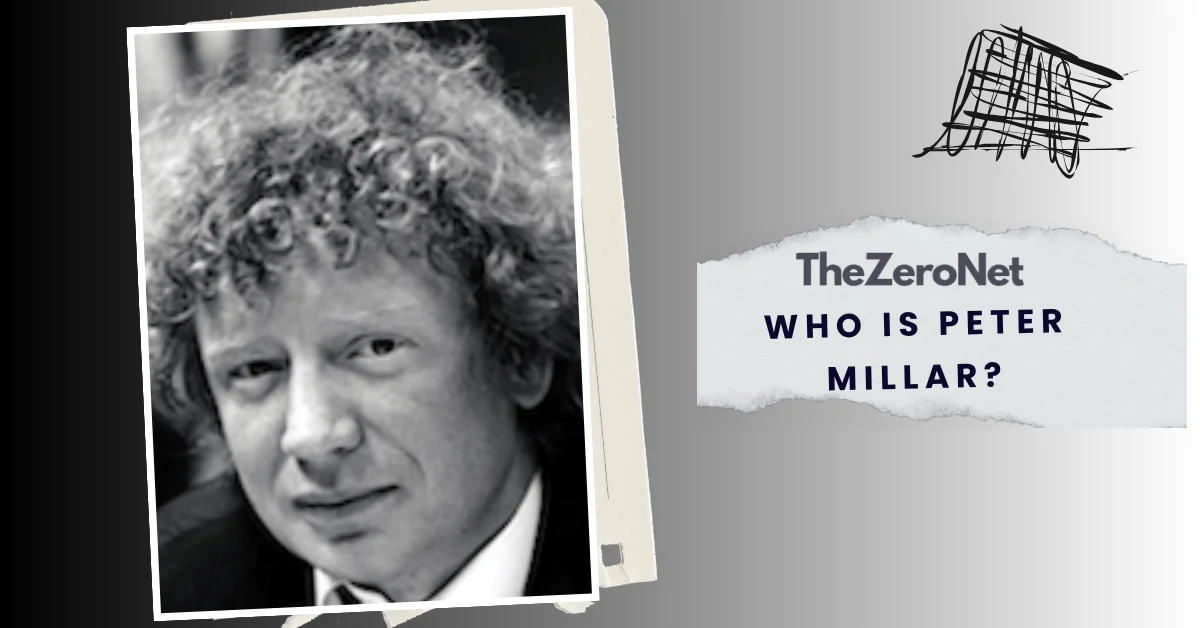

Who is Peter Millar? He’s the journalist who discovered his career on a French roadside — and spent the next four decades proving that one accidental conversation was worth following. Millar didn’t just cover the Cold War’s end. He lived inside it: surveilled by the Stasi, expelled from East Germany, and back in Berlin two weeks later when the Wall came down.
| Attribute | Details |
|---|---|
| Full Name | Peter Millar |
| Date of Birth | 22 February 1955 |
| Age at Death | 67 |
| Place of Birth | Bangor, County Down, Northern Ireland |
| Nationality | British |
| Profession | Journalist, author, translator |
| Spouse/Partner | Married; name not publicly confirmed |
| Children | Not publicly confirmed |
| Years Active | 1977–2023 |
| Education | Bangor Grammar School; Magdalen College, Oxford (French and Russian) |
| Notable For | Cold War reporting, Berlin Wall eyewitness coverage, Foreign Correspondent of the Year |
| Key Publications | Reuters, Sunday Telegraph, Sunday Times, The European |
Also Read: Misha Ezratti Wife Jessica Millman Ezratti: Full Biography & Family Life
An Accidental Introduction to Journalism
Peter Millar was a Oxford modern languages student spending a year teaching at a Paris school. One holiday, he set out hitchhiking south. The first driver to pull over was Terry Williams, a reporter at the Reuters Paris bureau.
Williams told Millar that journalism was the worst job in the world. Then he paused and delivered the punchline: “But it’s better than working.” That was enough. Millar was hooked — and joined Reuters as a trainee the following year.
Here’s the thing about that story: it wasn’t just a cute origin anecdote. It shaped everything. Millar never became the kind of correspondent who chased power or cultivated foreign ministers. He was always, at heart, a curious traveler who got good at writing it down.
Early Life: Bangor, Oxford, and the Iron Curtain Before the Job
Peter Millar was born on 22 February 1955 in Bangor, County Down, Northern Ireland. He attended Bangor Central Primary School and Bangor Grammar School, then won a place at Magdalen College, Oxford, to study French and Russian — two languages that would define his entire professional life.
He didn’t wait for a posting to discover Eastern Europe. During and before his university years, Millar traveled the Soviet bloc by train and hitchhike, reaching Moscow and Leningrad before most Western journalists had considered it possible. He was also robbed in the former Yugoslavia and made his way home barefoot from Dubrovnik to Belfast.
- Born in Northern Ireland, a society shaped by its own political divisions
- Studied French and Russian — both essential for Cold War reporting
- Traveled behind the Iron Curtain as a student, building intuitive knowledge of the Soviet bloc
- Arrived at Reuters already knowing how ordinary people lived under communist systems
That early exposure gave Millar an edge no amount of professional training could replicate. He understood Eastern Europe not as an ideological abstraction, but as a place where real people made practical choices under impossible conditions.
Who Is Peter Millar as a Reporter? Start in East Berlin.
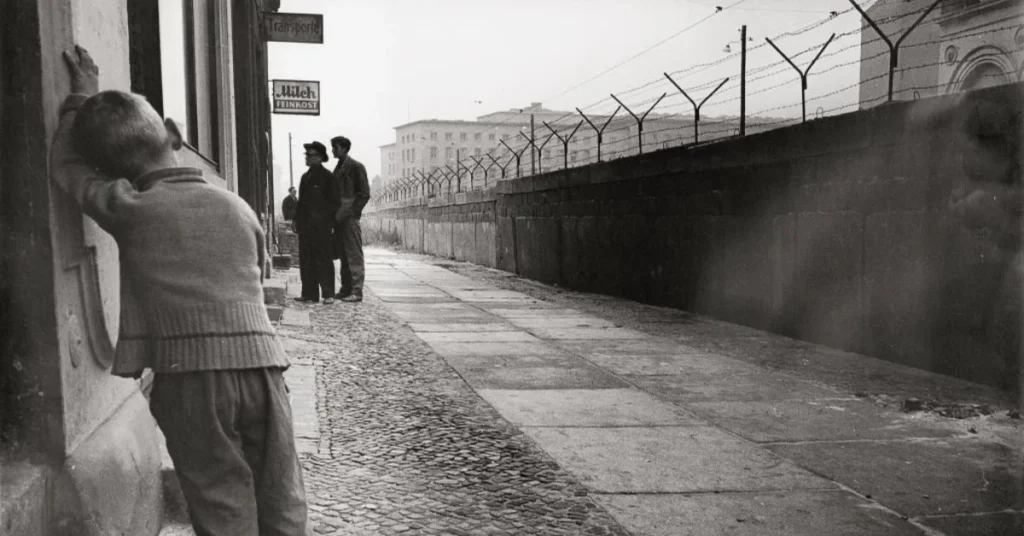
Millar joined Reuters in 1977, spent time in the London and Brussels bureaus, and was posted to East Berlin in 1981. He was 26 years old. In the early 1980s, he was the only non-German foreign correspondent stationed full-time in East Berlin — every other Western outlet had judged the posting too obscure or too difficult.
Millar stayed. He built friendships with ordinary East Germans — drinking beer in corner bars, visiting people’s homes, going for country walks — at a time when most foreign correspondents filed from press conferences. That difference in approach would eventually become the defining quality of his work.
The Stasi, naturally, took notice. After the Wall fell, Reuters had Millar’s East Berlin flat scanned for surveillance equipment. They found 37 microphones buried in the walls. The flat next door wasn’t a residence — it was a Stasi listening post. For years, every conversation he had in that apartment had been recorded.
He wasn’t just reporting on surveillance. He was living inside it.
Coverage Across the Soviet Bloc
Millar’s reporting wasn’t limited to East Germany. He covered the Solidarity movement in Poland, filed from Warsaw and moved to the Moscow bureau — where he spent three years tracking events from the death of Brezhnev to the rise of Gorbachev.
A notable career moment from Moscow: Millar beat rival agencies by 45 seconds in reporting the death of Soviet leader Konstantin Chernenko in 1985. In wire journalism, 45 seconds is a decisive margin.
He left Reuters in 1985 and moved to the Sunday Telegraph, where he negotiated a self-invented role as Central Europe Correspondent — reviving a geographic term that had been dormant since the Cold War divided the continent.
Career Milestones: Expelled by the Stasi, Back for the Wall’s Fall
By 1989, Millar was writing for the Sunday Times. During Mikhail Gorbachev’s visit to East Berlin for the country’s 40th anniversary celebrations, protests broke out across the city. Millar was arrested by the Stasi and interrogated. Then he was expelled from East Germany entirely.
Two weeks later, he was back in Berlin watching the Wall come down.
That sequence says everything about his commitment to the story. Expelled on a Friday. Back for the biggest moment of the 20th century a fortnight later.
Career Timeline
| Year | Milestone |
|---|---|
| 1977 | Joined Reuters as a trainee |
| 1981 | Posted to East Berlin — only non-German foreign correspondent in the city |
| 1981–1985 | Covered Solidarity in Poland; Moscow bureau, death of Brezhnev to rise of Gorbachev |
| 1985 | Left Reuters; joined Daily Telegraph, then Sunday Telegraph |
| 1989 | Arrested and expelled by the Stasi; returned to report the Wall’s fall |
| 1989 | Tomorrow Belongs to Me published |
| Late 1980s–90s | Correspondent, Sunday Times and The European |
| 2009 | 1989: The Berlin Wall, My Part in its Downfall published; named best Cold War read by The Economist |
| 2017 | The Germans and Europe: A Personal Frontline History published |
| 2023 | Died of a stroke, aged 67 |
Also Read: Who Is Kurt Kligner? The Austrian Playwright Who Rewrote the War
Influence Table: Millar Among His Peers
| Name | Known For | Why Comparable | Career Overlap |
|---|---|---|---|
| John Simpson | BBC World Affairs editor, Eastern Europe coverage | Both reported from the Soviet bloc during the same critical decade | 1980s–1990s |
| Timothy Garton Ash | Historian, The Magic Lantern (1989 eyewitness account) | Both produced landmark first-hand accounts of the 1989 revolutions | Late 1980s–2000s |
| Martin Sixsmith | BBC Moscow correspondent, author | Both covered Soviet collapse from inside the bureau | 1980s–1990s |
| Robert Fisk | Long-form foreign correspondent, immersive eyewitness journalism | Same generation of Fleet Street reporters who prioritized time-on-the-ground over source access | 1970s–2000s |
Achievements and Recognition
Biggest Career Milestone
Millar’s coverage of East Germany and Berlin in 1989 won him the Foreign Correspondent of the Year Award from BBC 2’s What the Papers Say — a programme on which he also appeared as an occasional presenter. The award confirmed what those who read him already knew: no British journalist understood that story the way Millar did.
What Sets Peter Millar Apart
The Spectator described his strength directly: Millar mixed with ordinary East Germans — in bars, in homes, on walks — and understood they were not an alien species. Most Cold War correspondents covered ideology. Millar covered people. That’s the gap.
The Economist, reviewing six books published to mark the 20th anniversary of the Wall’s fall, named his memoir the best read of the group. It praised his knack for befriending interesting people and tracking down important ones, and described the result as full of insight and “delightfully funny.”
Unanswered Question
Millar obtained access to his own Stasi files after 1989 and discovered which of his contacts had informed on him and which had not. The full picture of how his reporting was monitored, intercepted, or potentially shaped by East German intelligence during those years has never been publicly documented in full — and remains an open question.
Personal Life
Millar arrived in East Berlin unmarried, awaiting his fiancée. After she arrived, they married. He credited that fact with ending Stasi attempts to compromise him through what was known as the “honey trap” — a recruitment technique used routinely against foreign correspondents in Eastern Europe.
His wife’s name and details about his children are not confirmed in verified primary sources. His Berlin Wall memoir references his family warmly — a detail the Economist noted with gentle amusement, remarking that he mentions his family “rather too often.”
Beyond journalism, Millar was a compulsive traveler. His eyelashes froze in Oymyakon, eastern Siberia, at −71°C. He endured 48°C in Turkmenistan. He crossed the United States by rail for a book. Travel wasn’t a professional obligation — it was how he understood the world.
Books and Published Works
Millar was a prolific author and translator across four decades. His major works include:
- Tomorrow Belongs to Me — History of modern Germany through the eyes of ordinary Berliners, from the fall of Danzig to the fall of the Wall
- 1989: The Berlin Wall, My Part in its Downfall (Arcadia Books, 2009) — His Cold War memoir; named best read by The Economist
- All Gone to Look for America (2009) — A month crossing the United States by rail
- Stealing Thunder — A thriller
- Bleak Midwinter — A thriller set around a bubonic plague outbreak in Oxford
- Marrakech Express (2014) — Travel writing from Morocco
- The Germans and Europe: A Personal Frontline History (Arcadia Books, 2017) — A return to his central subject
He was also a literary translator — a lesser-known dimension of his output that reflected both his linguistic range and his ongoing commitment to European literature.
Legacy and Impact
Peter Millar died on 21 January 2023, of a stroke. He was 67. As of 2023, his books remain among the most readable first-hand accounts of Cold War Europe written in English — because he never lost sight of the human beings inside the geopolitical machinery.
His career covered events from the death of Brezhnev to the rise of Gorbachev to the collapse of communism across an entire continent. He reported from Warsaw, Prague, Budapest, Bucharest, and Belgrade. Few British journalists of his era covered as much ground with as much depth.
What Peter Millar changed, specifically, was the register of Cold War journalism. His competitors were filing from press conferences. He was in the corner pub. His method — patient, curious, people-first — produced something the diplomatic dispatches couldn’t: the texture of daily life under a system about to collapse.
He came from Bangor, Northern Ireland. Not from a London political family, not from a well-connected network. He found his career by accident on a French road and spent four decades proving that the accident was worth something. That’s not a footnote. That’s the story.
Conclusion
Peter Millar’s career was built on a single insight: that the Cold War was being lived by ordinary people, not just negotiated by governments. He spent years eating with them, drinking with them, and having his conversations monitored through 37 microphones in his walls. When the Wall finally came down, he was the British journalist who had genuinely earned the right to write about it. His books don’t read like dispatches. They read like memory — specific, warm, and honest about what the reporter got wrong. That’s rare. And it’s why they last.
Also Read Our Latest Feature About Fashion: Reading About Fashion Isn’t Just Research Anymore — It’s a Full Aesthetic
Frequently Asked Questions About Peter Millar
What made Peter Millar different from other Cold War journalists?
Most correspondents of his era covered Eastern Europe through official briefings and diplomatic sources. Millar spent years embedded among ordinary East Germans — in bars, homes, and on street corners. That approach produced reporting with a texture and honesty that set his work apart from the mainstream Cold War press pack.
How did Peter Millar die?
Millar died from a stroke on 21 January 2023. He was 67 years old. His death was reported by the Reuters alumni publication The Baron and noted in an obituary in The Times.
Where was Peter Millar from?
He was born in Bangor, County Down, Northern Ireland, on 22 February 1955. He was educated at Bangor Grammar School before studying French and Russian at Magdalen College, Oxford.
Was Peter Millar really arrested by the Stasi?
Yes. During protests in East Berlin surrounding Mikhail Gorbachev’s 1989 visit for East Germany’s 40th anniversary, Millar was arrested and interrogated by the Stasi before being expelled from the country. He returned two weeks later to report on the fall of the Berlin Wall.
What is Peter Millar’s best-known book?
1989: The Berlin Wall, My Part in its Downfall (Arcadia Books, 2009) is widely considered his most significant work. The Economist named it the best read of the books published for the Wall’s 20th anniversary. The Spectator praised it as a witty, wry account of life as a correspondent in Cold War Berlin.
Did Peter Millar win awards for his journalism?
Yes. He won the Foreign Correspondent of the Year Award from BBC 2’s What the Papers Say for his 1989 reporting on East Germany and the Berlin Wall. He was also an occasional presenter on the programme.
What languages did Peter Millar speak?
Millar studied French and Russian at Oxford — the two languages most directly relevant to Cold War European reporting. He was also a literary translator, suggesting a professional-level command of German acquired through his years in Berlin.
How long was Peter Millar in East Berlin?
Millar was posted to East Berlin by Reuters in 1981 and remained embedded in Central Europe through most of the decade, moving between East Berlin, Warsaw, and Moscow before his final Berlin posting for the Sunday Times in 1989. His total immersion in the Soviet bloc spanned roughly eight years.
