
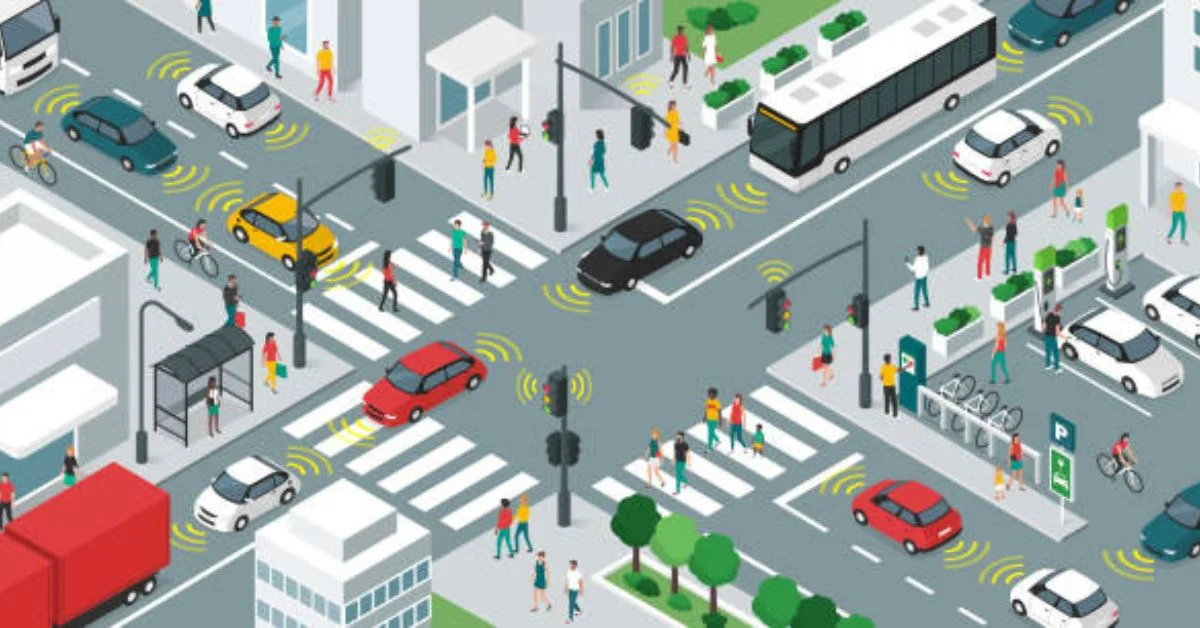

Cities don’t sleep — and neither does their data. Every traffic light, waste bin sensor, emergency call, and connected camera generates a stream of information that, if managed well, can change how millions of people experience urban life. Smart city data management sits at the center of that transformation, turning raw digital noise into decisions that affect housing, transit, energy, health, and public safety.
And in 2026, the stakes are higher than ever.
The global IoT market in smart cities is projected to grow from USD 300 billion in 2021 to over USD 650 billion by 2026 — and in the United States alone, cities are expected to invest USD 41 trillion over the next two decades to upgrade their digital infrastructure. Numbers that large only make sense if the underlying data systems actually work. That’s the problem cities are racing to solve right now.
What Smart City Data Management Actually Means
Strip away the jargon and you’re left with a straightforward challenge: cities collect enormous volumes of data from dozens of disconnected sources, and most of them don’t know what to do with it.
A smart city uses electronic and digital technologies and IoT devices to collect data from citizens, infrastructure, and assets — and that data is analyzed to efficiently manage resources and services, improve operations, and enhance quality of life. The word “analyzed” is doing a lot of heavy lifting in that definition.
Smart city data management provides the foundation that allows cities to move from isolated systems and fragmented data toward a unified, intelligence-driven urban ecosystem. When implemented well, it enables city leaders to make informed, real-time decisions, optimize resources, anticipate challenges, and improve quality of life for residents.
What this looks like in practice: traffic sensors feeding into emergency routing algorithms, environmental monitors flagging air quality shifts before they hit critical thresholds, or energy grids adjusting load distribution based on real-time consumption data. None of that works without a solid data backbone.
The Layers of a Working Smart City Data System
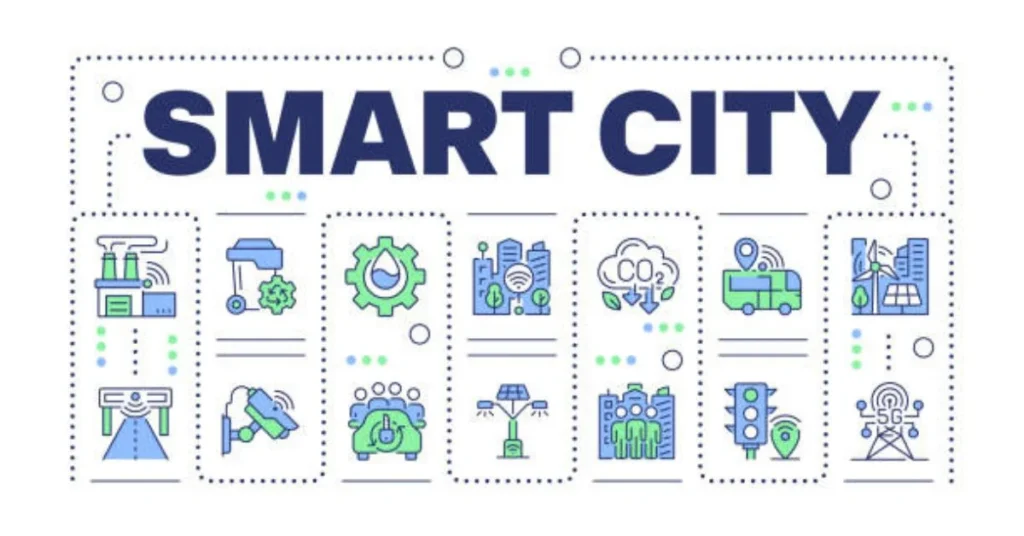
Getting smart city data management right isn’t a single technology decision. It’s a stack of connected choices — and each layer has to hold.
- Collection is where everything starts. Smart cities collect data from citizens, devices, buildings, and cameras — with applications spanning traffic and transportation systems, power plants, utilities, water supply networks, waste disposal, criminal investigations, information systems, schools, libraries, hospitals, and other community services. That’s an enormous breadth of data types, each with different formats, frequencies, and sensitivity levels.
- Integration is where cities historically struggle most. Smart city data management aims to create a shared data foundation that enables cross-department collaboration. When data is accessible through common platforms and standards, insights can be combined to address complex urban challenges — for example, integrating traffic data with emergency response systems to improve route optimization during incidents, or combining environmental data with public health data to support proactive interventions.
- Governance is the layer that quietly holds everything together. Breaking down silos requires both technology and governance — clear ownership, data-sharing policies, and executive sponsorship are essential to success. Without this, even the best data infrastructure fragments into departmental turf wars.
What the Research Shows
Here’s where the gap between theory and practice gets uncomfortable. Cities are collecting more data than ever. But the ability to act on it isn’t keeping pace.
At this year’s Smart Cities Connect Conference in Raleigh, IT leaders from the City of Raleigh emphasized that their biggest challenge for AI adoption is managing massive datasets that often lack consistent metadata or structure. For AI to generate insights, cities must find better ways to clean, organize, and prepare their data.
Scalability constraints, security vulnerabilities, interoperability issues, and data governance complexities remain critical barriers to adoption. The massive influx of heterogeneous data from distributed sensors and connected devices requires robust computational infrastructures that can handle real-time analytics while ensuring data integrity and privacy.
Research into this topic shows a persistent pattern: the cities making the most progress aren’t the ones with the most sensors — they’re the ones with the clearest governance structures. Data without governance is just noise with extra steps.
According to MarketsandMarkets, the smart city analytics market is projected to grow from $28.6 billion in 2022 to $89.9 billion by 2027, at a CAGR of 25.6%. That growth is real. But it’s contingent on cities actually solving the organizational and policy challenges sitting underneath the technology.
The Privacy Problem Cities Can’t Ignore
Smart city data management isn’t just a technical challenge. It carries a responsibility that directly affects how citizens experience their own city.
The rapid adoption of smart city technologies — ranging from IoT devices and AI-driven surveillance to intelligent transportation systems — has transformed urban living by enhancing efficiency, sustainability, and connectivity. But this digital evolution has simultaneously introduced complex privacy challenges, as massive volumes of personal data are continuously collected, processed, and shared across interconnected systems.
Privacy risks include unauthorized surveillance, data breaches, algorithmic bias, and the erosion of consent. These aren’t hypothetical edge cases. They’re documented outcomes from cities that moved fast without thinking carefully about data ethics.
The increasing deployment of interconnected devices in smart city environments has significantly enhanced operational efficiency and real-time analytics — but this rapid digitization also introduces complex security and privacy challenges, particularly in the handling of sensitive data across heterogeneous and resource-constrained networks.
Cities that handle this well tend to share one approach: they treat privacy as a design requirement, not an afterthought. That means building data governance frameworks before sensors go live, not after residents start complaining.
AI, Digital Twins, and Where Smart City Data Management Is Heading
The most forward-looking cities aren’t just collecting and governing data. They’re building systems that use data to simulate, predict, and act — sometimes without a human in the loop.
The smarter city of 2026 can be thought of not as a collection of disconnected systems, but as a single living organism. Sovereign data spaces provide the trusted neural pathways that let city departments, utilities, operators, and partners share and act on data without losing control. The digital twin functions as the brain, continuously sensing current conditions and rehearsing tomorrow’s scenarios before decisions are made in the real world. Agentic AI becomes the reflex system — automating complex, cross-domain tasks and coordinating responses at machine speed.
In 2026, city IT leaders are prioritizing safe, secure, and data-driven AI deployments that deliver measurable outcomes in mobility, public safety, infrastructure management, and climate resilience. The question is no longer whether to use AI — it’s how to do so responsibly, securely, at scale, and in ways that build public trust.
Interoperability is becoming the metric that matters most. Interoperability across departments and municipalities is key to supporting a robust smart network of cities nationwide. A city that can share data seamlessly between its transport authority, health department, and emergency services is fundamentally more capable than one where each operates in isolation — regardless of how sophisticated the individual systems are.
Dublin’s digital twin work, Sunderland’s low-carbon data infrastructure, and Malaysia’s AI-powered urban innovation projects are all examples of cities testing what this looks like in practice. As cities confront the combined pressures of climate change, infrastructure resilience, and digital transformation, the challenge is translating strategy into practical action.
What Cities Actually Get Right — and Where They Still Fall Short
Anyone who has studied how municipalities handle data operations knows the gap between the vision and the reality can be significant.
The cities that manage this well tend to share a few non-negotiable habits. They appoint dedicated chief data officers with real authority. They maintain live data inventories across departments. They treat data quality as infrastructure — something that degrades without active maintenance. And they publish governance frameworks publicly, which builds citizen trust in a way that no press release can replicate.
Cities that invest in comprehensive data and IoT security programs will be better positioned to realize the benefits of smart city technology while managing associated risks — and this includes implementing robust technical controls, establishing effective governance frameworks, and maintaining ongoing compliance with evolving regulatory requirements while building citizen trust in digital government services.
The weaknesses are equally consistent. Legacy systems that don’t talk to each other. Procurement processes that favour vendors over interoperability. Political cycles that change priorities before long-term data strategies can mature. And a persistent underestimation of how much skilled human judgment is still required — even with AI in the loop.
Smart city data management isn’t a product you buy. It’s an institutional capability you build.
The Road Ahead

Cities that align their data strategies with emerging smart city trends are better prepared for long-term sustainability. Cities that invest in platform-based architectures that support multiple use cases rather than isolated solutions, and that maintain an increased focus on real-time decision-making, are consistently outperforming those that don’t.
The cities that get this right over the next five years won’t be the ones with the most sensors or the biggest budgets. They’ll be the ones that figured out governance, interoperability, and trust first — and built their technology on top of those foundations.
Data isn’t the goal. Better urban life is. Smart city data management is just how you get there.
Also Ready: AI Transformation Is a Problem of Governance — Here’s the Proof
Frequently Asked Questions
What is smart city data management?
It’s the practice of collecting, integrating, governing, and analyzing data generated by urban systems — including IoT devices, sensors, transportation networks, public services, and infrastructure — to support more effective city operations and decision-making.
What are the biggest challenges in smart city data management?
Data silos, inconsistent data quality, privacy risks, cybersecurity vulnerabilities, and lack of standardized governance frameworks are consistently the hardest challenges cities face when building effective data systems.
How does AI fit into smart city data management?
AI is increasingly used for real-time data analysis, predictive modelling, traffic optimization, and automated decision-making. But its effectiveness depends entirely on the quality and structure of the underlying data — which many cities are still working to get right.
Why is privacy a concern in smart city data collection?
Smart city systems collect sensitive information about citizen movement, behaviour, and services use. Without strong governance and consent mechanisms, this data can be misused for surveillance or compromised in a breach, eroding public trust in urban digital services.
Are digital twins part of smart city data management?
Yes. A digital twin is a real-time virtual replica of a city’s infrastructure, fed by live data. It allows city planners to simulate scenarios — infrastructure upgrades, disaster responses, traffic changes — before implementing them in the physical world.
