


The model worked. The demo was clean. The board signed off. And then everything quietly fell apart. That story is playing out inside boardrooms across the world right now — because AI transformation is a problem of governance, and the evidence in 2026 is no longer ambiguous. Global enterprise AI spending is projected to hit $665 billion this year, yet approximately 73% of those deployments fail to deliver their projected return on investment. The models aren’t the failure point. The decision-making structures around them are.
Here’s what that actually means — and what organisations have to do differently.
Why AI Transformation Is a Problem of Governance — Not Technology
Ask most executives where AI transformation breaks down and they’ll point at infrastructure. Data quality. Talent shortages. Maybe the wrong vendor.
They’re looking in the wrong place.
AI is no longer primarily generating text for humans to review. It’s taking actions. Placing orders. Triggering workflows. Sending communications. Making decisions in real time, often faster than any human oversight loop could catch. The moment that shift happened, a technology problem became a governance problem — and most organisations weren’t ready for it.
Consider a concrete scenario: an autonomous procurement agent misreads pricing data during a high-volume period and executes purchase orders worth $2 million in excess inventory. The error is discovered 72 hours later. The question “who approved that action?” turns out to have no clean answer, because the governance framework was designed for AI that generates recommendations — not AI that acts on them.
That’s not a system glitch. That’s a collapsed accountability structure.
Who Actually Owns AI Inside Organisations?
The 2026 picture is not about model accuracy or compute. It’s about authority, ownership, and reporting lines. Boards approve the budgets, IT ships the pilots, and somewhere between the two, decision rights go missing.
The data highlights a critical gap between high-level AI discussions and operational accountability:
| Stakeholder / Organizational Layer | Current AI Governance Status (2025/2026 Data) |
|---|---|
| Corporate Boards | 62% discuss AI regularly, yet only 27% have formally integrated it into committee charters. |
| Chief Executive Officers (CEOs) | Only 28% of CEOs take direct, personal responsibility for enterprise AI governance. |
| Formal Board Ownership | Just 17% of boards formally own the risk and policy framework surrounding AI. |
| Enterprise Operations | Roughly 80% (4 out of 5) of enterprises run active AI systems without any clear chain of accountability. |
And it doesn’t stop there. “Shadow AI” exploded in 2026 because AI tools became incredibly accessible. Employees now connect AI systems to spreadsheets, CRMs, databases, and internal APIs without waiting for IT approval. Nobody approved it. Nobody mapped the risk. And when something goes wrong, nobody owns it either.
What the Research Shows
According to Deloitte’s 2026 State of AI in the Enterprise report, only 1% of companies describe themselves as AI-mature, and just 34% are genuinely reimagining their businesses with the technology. The PEX Report 2025/26 reveals that only 43% of organisations have a formal AI governance policy — meaning the majority are deploying AI without one.
That statistic deserves a pause. The majority. Not a struggling minority.
Deloitte’s survey of 3,235 senior leaders found that only 1 in 5 organisations has a mature governance model for autonomous AI agents. These aren’t start-ups running lean. These are major enterprises with compliance teams, risk departments, and governance frameworks already in place — frameworks that weren’t built with autonomous AI in mind.
Data from the AI Incident Database reveals a 32% increase in reported AI incidents in 2024 alone, with the same trend expected in 2025 and 2026. They are almost never caused by a bad model. They are caused by a breakdown in oversight, accountability, and regulatory compliance.
The pattern is consistent. When we say AI transformation is a problem of governance, this research is exactly what backs that claim up. Governance gaps, not technical ones, drive AI failure.
The Drift Problem Nobody Planned For
There’s a specific challenge that separates AI governance from every other kind of IT governance: the system you deployed last March isn’t the same system running today.
A static system behaves the same way in March as in October. AI models retrain, ingest new data, and shift their outputs over time. Governance has to handle drift detection, retraining triggers, and rollback authority — none of which sit comfortably inside a standard IT change-management process.
Gartner’s Q3 2024 survey of 248 data management leaders found 63% of organisations either lack AI-ready data practices or are unsure whether they have them. Gartner predicted that 60% of AI projects will be abandoned through 2026 because of data readiness alone.
And here’s what that means operationally: an AI model that seemed accurate at launch can drift into producing biased or commercially damaging outputs months later — with no alert, no audit trail, and no defined owner responsible for catching it. Governance isn’t just about launch. It’s a live, continuous responsibility.
Also Read: Context Match: The Hidden Force Behind Modern Ads and Search Intent
Regulation Is Compressing the Timeline
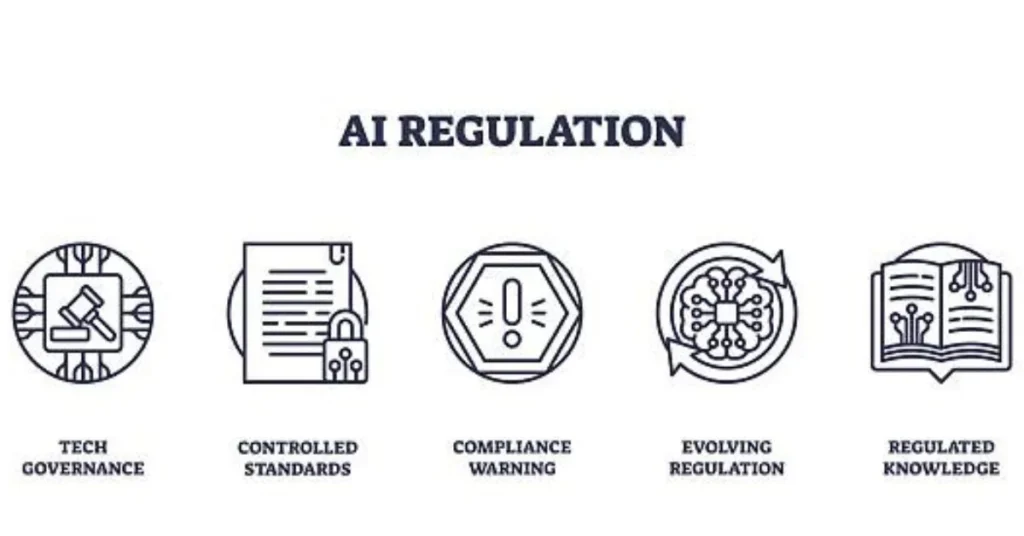
For organisations still treating governance as a future priority, regulators have made the decision for them.
The EU AI Act’s high-risk compliance requirements are activating in 2026. This shifting regulatory landscape introduces unprecedented operational and financial risks for businesses:
| Risk Category | Key Compliance & Market Impact Metrics |
|---|---|
| Financial Penalties | Non-compliance under the EU AI Act carries fines up to €35 million or 7% of global annual turnover. |
| Regulatory Landscape | Over 1,100 AI-related bills were introduced in the US in 2025, creating a highly fragmented compliance environment. |
| Direct Capital Losses | AI compliance and oversight failures resulted in $4.4 billion in direct organizational losses in 2025. |
| Customer Retention | Brand damage stemming from unethical or unmonitored AI use triggers 15% to 20% customer churn annually. |
| Market Accessibility | Looming EU non-compliance threatens to restrict market access for up to 68% of global AI firms. |
Over half of organisations lack systematic inventories of AI systems currently in production or development. Without knowing what AI exists within the enterprise, risk classification and compliance planning is impossible.
You cannot govern what you cannot see. And right now, most organisations can’t fully see what they’ve built. This is precisely why AI transformation is a problem of governance — not infrastructure, not compute, not model choice.
What Functional AI Governance Actually Looks Like
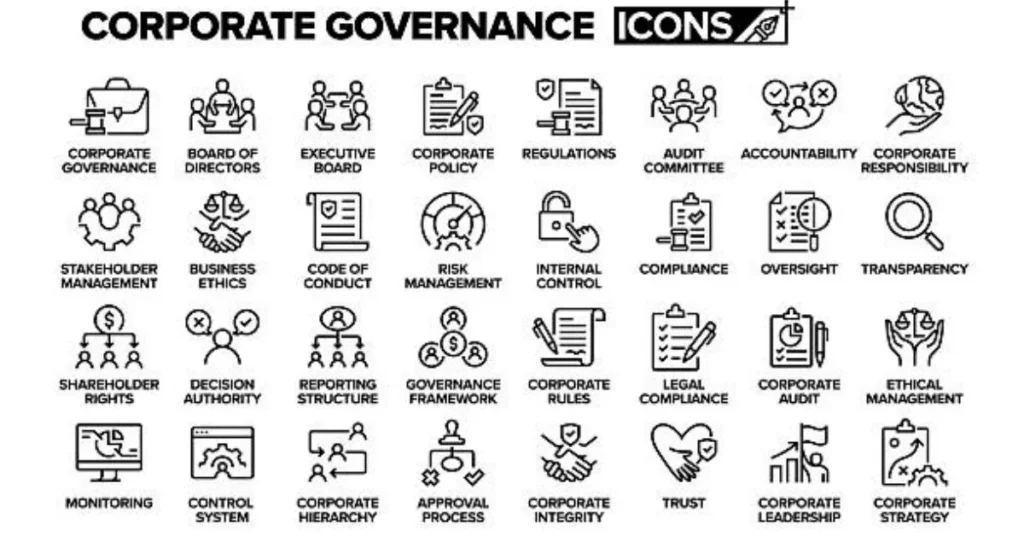
In 2026, AI governance is shifting from aspirational principles to practical infrastructure — much like cybersecurity or financial controls. That shift is driven by one core requirement: leaders need to scale AI without losing control of risk.
Functional governance is no longer just a static policy document. Building a resilient AI governance framework in 2026 requires four operational steps:
- Compliance Artifacts: Maintain continuously updated, audit-ready logs, human-in-the-loop approvals, and clear traceability records to produce for regulators on demand.
- Full Inventory Mapping: Track and map every active AI tool, SaaS integration, and internal model to eliminate the risks of shadow AI.
- Central Agent Registry: Maintain a centralized record of every autonomous agent in operation, documenting its unique identity, specific capabilities, and granted data permissions.
- Live Runtime Monitoring: Provide IT leaders with real-time tracking visibility to see exactly where, when, and how agentic instances are acting on enterprise data.
And the payoff is real. Strong compliance frameworks cut penalties by 80%. Companies with mature governance structures spend 30% less on external advisory services. Governance isn’t a cost centre — it’s a competitive advantage with a measurable return.
Also Read: Warmup Cache Request: The Hidden Fix Killing Your Page Speed
AI Transformation Is a Problem of Governance — The Leadership Alignment Angle
One of the biggest governance failures involves executive alignment. A 2026 BCG survey found major disconnects between CEOs and boards regarding AI expectations and governance priorities. Some executives expect rapid automation and cost reduction, while operational teams struggle with implementation risks and compliance requirements.
That gap produces an environment where AI pilots look great on slides and collapse in production. The team chasing speed and the team managing risk are pulling in different directions — and nobody has authority to arbitrate.
The World Economic Forum has identified the core challenge: AI governance cannot be a top-down mandate layered over an existing organisation. It must be a living, business-specific, contextually intelligent operating system woven into how decisions are made every day.
That’s a structural challenge, not a technical one. Solving it requires rewiring how organisations assign accountability — not just selecting better models.
Where This Is Going
By late 2026, strong AI governance is expected to differentiate organisations that scale safely from those that stall under accumulated risk. Unified governance platforms are becoming critical infrastructure, and agentic AI will intensify the need for clear authority, permissioning, and runtime controls.
The global AI governance market is projected to grow from $309 million in 2025 to nearly $5.9 billion in the years ahead — a number that tells you exactly how seriously the market now takes this problem.
The defining question of 2026 is no longer whether organisations will use AI. They will. The real question is whether they will govern it effectively. AI transformation is a problem of governance because it reshapes decision-making authority, redistributes risk, and amplifies impact at scale. Technology enables power. Governance controls it. Organisations that treat governance as a strategic capability — not a compliance burden — will build resilient, trusted, and scalable AI systems.
The strongest competitive advantage in the AI era won’t be the smartest algorithm. It’ll be the clearest accountability structure around it.
Frequently Asked Questions
Why is AI transformation described as a governance problem rather than a technology problem?
Because the models themselves are mostly functioning as designed. The failures occur when there’s no clear ownership of risk, no defined escalation process, and no structure for catching errors before they compound. Governance — not engineering — is what’s missing.
What does “shadow AI” mean and why is it a governance risk?
Shadow AI refers to employees using AI tools without formal approval or oversight. It creates compliance exposure, data security risks, and unattributed decision-making — all of which fall outside any existing governance framework.
What are the regulatory consequences of poor AI governance in 2026?
Under the EU AI Act, fines for high-risk AI non-compliance can reach €35 million or 7% of global annual turnover. In the US, over 1,100 AI-related bills were introduced in 2025, creating a complex multi-jurisdiction compliance landscape for any organisation operating across states or internationally.
What does operational AI governance actually require in practice?
It requires a complete inventory of all AI systems in production, defined ownership for each, lifecycle monitoring including drift detection, documented audit trails, human oversight protocols for high-risk decisions, and evidence that can be produced to regulators on demand.
Can smaller organisations afford to build proper AI governance frameworks?
Yes — and the cost of not doing so is higher. EU AI Act penalties for SMEs are proportionate but still significant. More practically, governance failures erode customer trust, trigger regulatory scrutiny, and kill AI ROI. Basic governance — a system inventory, clear ownership, and documented risk thresholds — doesn’t require enterprise-scale resources to implement.
