
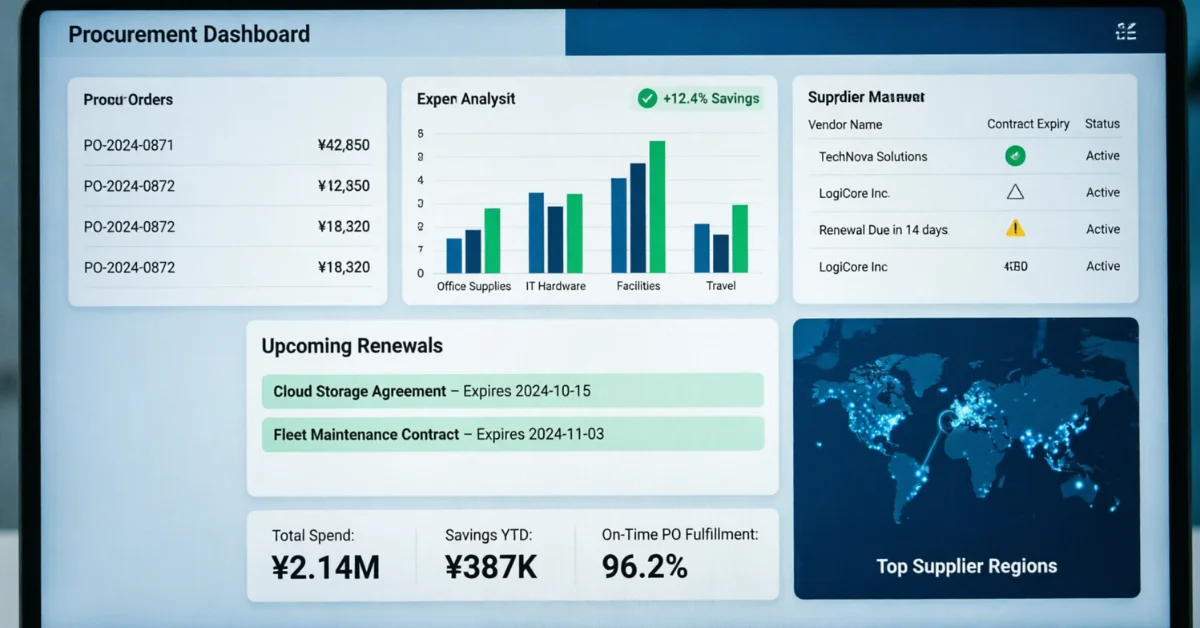

Here’s where most growing companies trip up: they buy procurement software once, outgrow it in eighteen months, and start over from scratch. Knowing how to build a procurement tech stack for scaling operations from the start avoids that expensive do-over. The market backs this up — global procurement software revenue hit an estimated $8.89 billion in 2025 and keeps climbing through 2026 and beyond, according to market data from Fortune Business Insights. That growth isn’t random. Companies that used to run purchasing through email threads and spreadsheets are now running it through connected platforms that talk to finance, inventory, and suppliers at once.
This guide breaks down what that stack actually looks like, which pieces matter at each stage of growth, and where procurement leads tend to lose months they didn’t have to lose.
What a Procurement Tech Stack Actually Means in 2026
A procurement tech stack isn’t one piece of software. It’s the combination of tools, data, and workflows that cover the source-to-pay process — sourcing, supplier management, purchasing, contract handling, invoicing, and spend tracking.
Anyone who has run procurement for a growing company knows the trap: you start with one tool that does everything okay-ish, and within a year you’re bolting on three more to patch the gaps. That patchwork is exactly what causes the rebuild cycle.
The smarter path treats the stack as a system from day one — a set of connected parts, not a pile of disconnected apps that happen to sit on the same laptop.
How to Build a Procurement Tech Stack for Scaling Operations: Where to Start
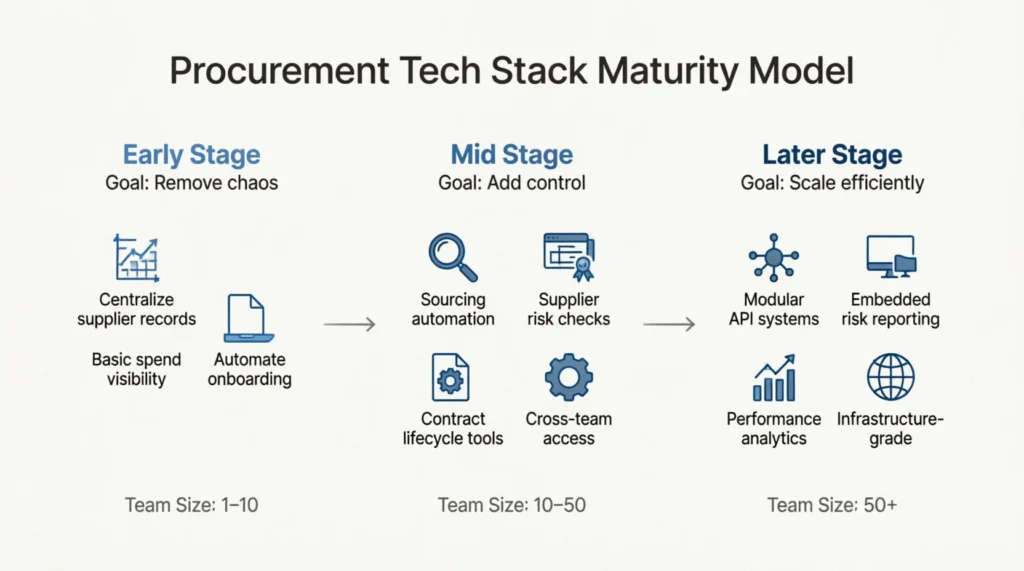
Start by matching tools to your actual stage, not your ambitions. Three rough phases tend to repeat across companies:
- Early stage: centralize supplier records, get basic spend visibility, automate onboarding. The goal here is removing chaos, not adding complexity.
- Mid stage: add sourcing automation, supplier risk checks, and contract lifecycle tools. This is where cross-team access starts mattering — finance, legal, and ops all need eyes on the same data.
- Later stage: move to modular, API-connected systems with embedded risk and performance reporting. At this point, the stack needs to behave like infrastructure, not a collection of apps.
A common mistake is jumping straight to enterprise-grade software before the spend volume justifies it. A ten-person startup buying an enterprise source-to-pay suite usually ends up paying for modules nobody touches.
Core Components Every Growing Procurement Function Needs
Regardless of company size, a few pieces show up in nearly every working stack:
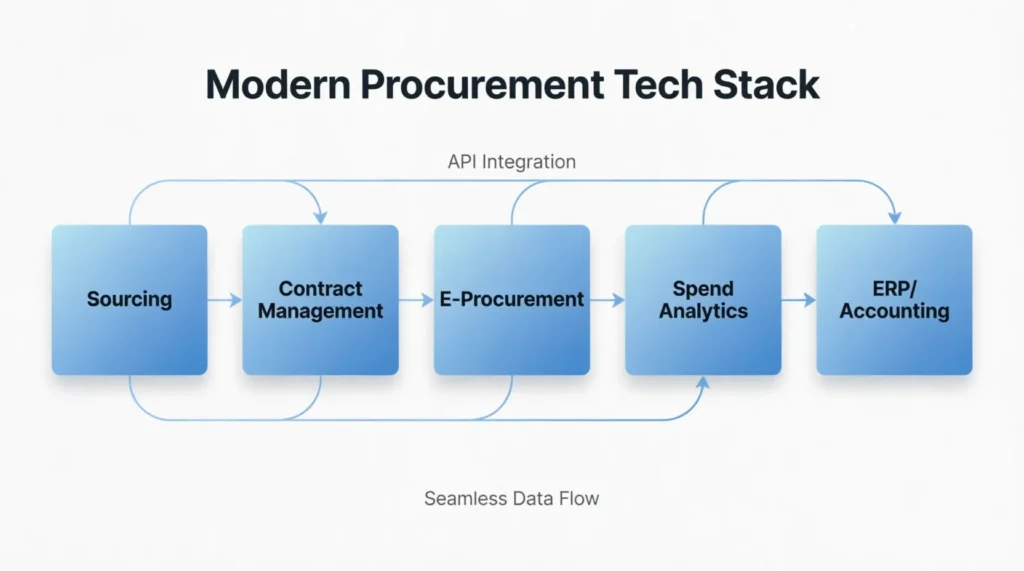
- Supplier information management — one record per vendor, not five spreadsheets that disagree with each other
- E-procurement / purchase-to-pay tools — requisition, approval, and PO creation in one flow
- Contract lifecycle management — tracking renewal dates, terms, and obligations before they become surprises
- Spend analytics — visibility into where money actually goes by category and vendor
- ERP and accounting integration — connecting procurement data to systems like NetSuite, QuickBooks, or Xero so finance isn’t reconciling numbers by hand
Skip the integration piece and the rest barely matters. A spend analytics tool that doesn’t sync with your accounting software just creates a second, slightly different version of the truth.
What the Research Shows
The numbers back up why this matters now rather than later. Procurement teams currently manage roughly 50% more spend than they did five years ago, often without a matching increase in headcount. That gap gets closed by tools, not by hiring alone.
Research from McKinsey found that half of all procurement activities can already be automated with technology available right now, and that digital tools can add an extra 3 to 10 percent in annual cost savings on top of what manual processes capture. Once you understand how to build a procurement tech stack for scaling operations without piling on redundant tools, capturing that kind of return becomes a lot more realistic.
Real-World Use Cases Across Company Types
A hardware startup juggling bills of materials needs supplier tracking and lead-time visibility above almost anything else — one missed part order can delay an entire production run.
A retail or e-commerce company scaling SKU count cares most about purchase order automation tied to demand signals, so stock doesn’t run out mid-season.
A services or SaaS company with a lighter physical footprint usually needs vendor spend tracking and contract renewal alerts more than sourcing tools — most of their spend sits in software subscriptions and contractor agreements.
Non-technical ops leads at smaller companies should lean toward no-code configuration and pre-built integrations rather than systems that need a developer to maintain. Larger, multi-entity organizations need the opposite: open APIs, custom workflows, and governance controls that satisfy compliance teams across regions.
Common Pitfalls When Scaling Your Procurement Stack
Vendor lock-in shows up fast when a single all-in-one platform handles everything and switching later means rebuilding from zero. Composable, API-connected tools sidestep that.
Data fragmentation across disconnected systems is the other repeat offender — sourcing in one tool, contracts in another, spend in a third, none of them talking. Teams end up spending more time reconciling numbers than managing suppliers.
Skipping change management is underrated as a risk. Professionals who’ve managed procurement rollouts consistently say the software was never the hard part — getting category managers to actually use it instead of falling back to email was.
How to Build a Procurement Tech Stack for Scaling Operations as You Grow
Looking ahead, the stack itself is shifting from a set of separate tools toward a connected, API-first setup where AI handles a chunk of the repetitive work — flagging contract risks, suggesting suppliers, forecasting spend — while people focus on the decisions that actually need judgment.
The practical takeaway hasn’t changed though: pick tools that fit your current spend and headcount, make sure they connect to each other and to finance, and revisit the stack at each growth milestone instead of waiting for it to break.
Conclusion
Working out how to build a procurement tech stack for scaling operations isn’t about buying the most expensive suite on the market. It’s about matching tools to your actual spend, team size, and complexity at each stage, then making sure those tools talk to each other instead of just sitting next to each other. Get that sequencing right, and the rebuild cycle that traps so many growing companies simply doesn’t happen.

FAQ
What’s the difference between an e-procurement tool and a full procurement tech stack?
E-procurement covers requisitions, approvals, and purchase orders. The full stack adds sourcing, contracts, supplier risk, and spend analytics around that core.
How much should a small business spend on procurement software?
It depends on spend volume, but most early-stage companies start with lightweight, low-cost tools and add modules as spend and supplier count grow — not the reverse.
Can a procurement tech stack work without a dedicated IT team?
Yes, especially with no-code platforms built for non-technical ops teams. The trade-off is usually less customization than an IT-supported setup allows.
When should a growing company move from spreadsheets to dedicated procurement software?
Once supplier records start disagreeing with each other or approvals routinely get lost in email, that’s the signal — not a fixed revenue number.
Does a procurement tech stack need to connect to accounting software?
It should. Without that connection, finance and procurement end up working from two different versions of spend data, which causes reconciliation headaches every month.
