
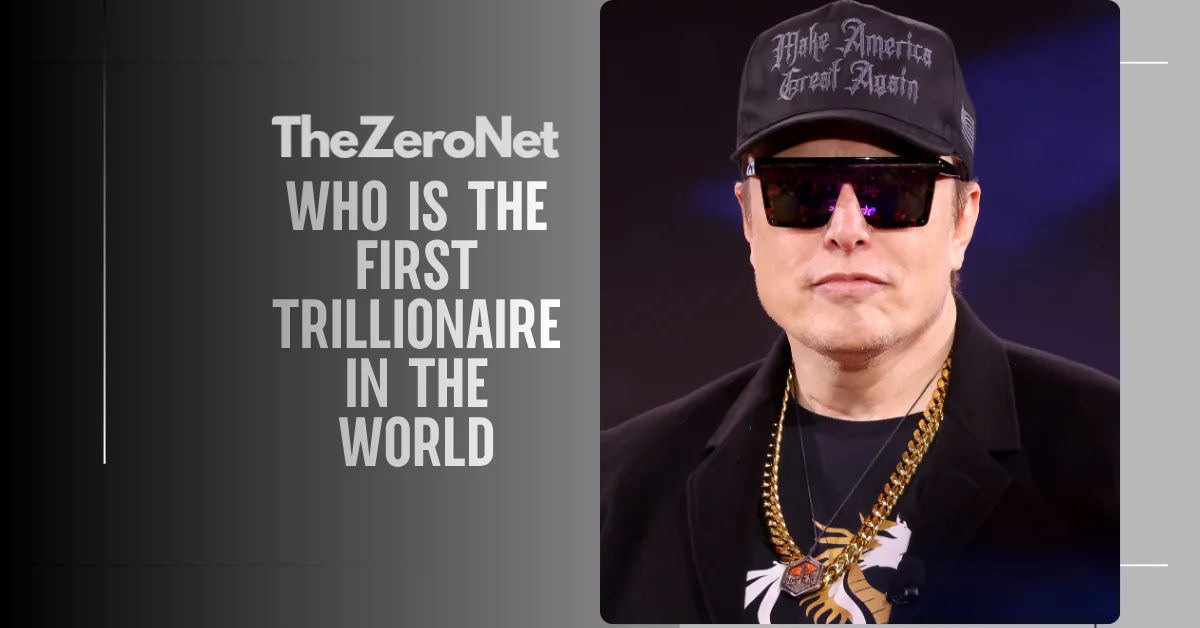

The answer to who is the first trillionaire in the world arrived on June 13, 2026 — not with fanfare, but with a stock ticker. Elon Musk crossed the $1 trillion mark when SpaceX debuted on the Nasdaq, and nothing about the global economy has looked quite the same since. It’s a milestone so large that spending $1 million every day still wouldn’t drain it for nearly 3,000 years.
| Attribute | Details |
|---|---|
| Full Name | Elon Reeve Musk |
| Date of Birth | June 28, 1971 |
| Age | 54 (as of 2026) |
| Place of Birth | Pretoria, South Africa |
| Nationality | South African-born; U.S. citizen (since 2002) |
| Profession | Entrepreneur, CEO, Engineer |
| Spouse/Partner | Not publicly confirmed (as of 2026) |
| Children | 14 (confirmed, per Biography.com) |
| Years Active | 1995–present |
| Education | University of Pennsylvania (B.S. Physics, B.A. Economics); Stanford University (enrolled, did not complete PhD) |
| Notable For | World’s first trillionaire; CEO of Tesla and SpaceX |
| Net Worth | ~$1.1 trillion (as of June 2026, per Forbes) |
Who Is the First Trillionaire in the World — and How Did Musk Get There?
The short version: SpaceX went public. SpaceX’s IPO valued the rocket and satellite company at roughly $1.77 trillion, pushing Elon Musk’s net worth to about $1.1 trillion and making him the first trillionaire on paper.
And that’s the thing — no one expected it to happen this fast, or this cleanly.
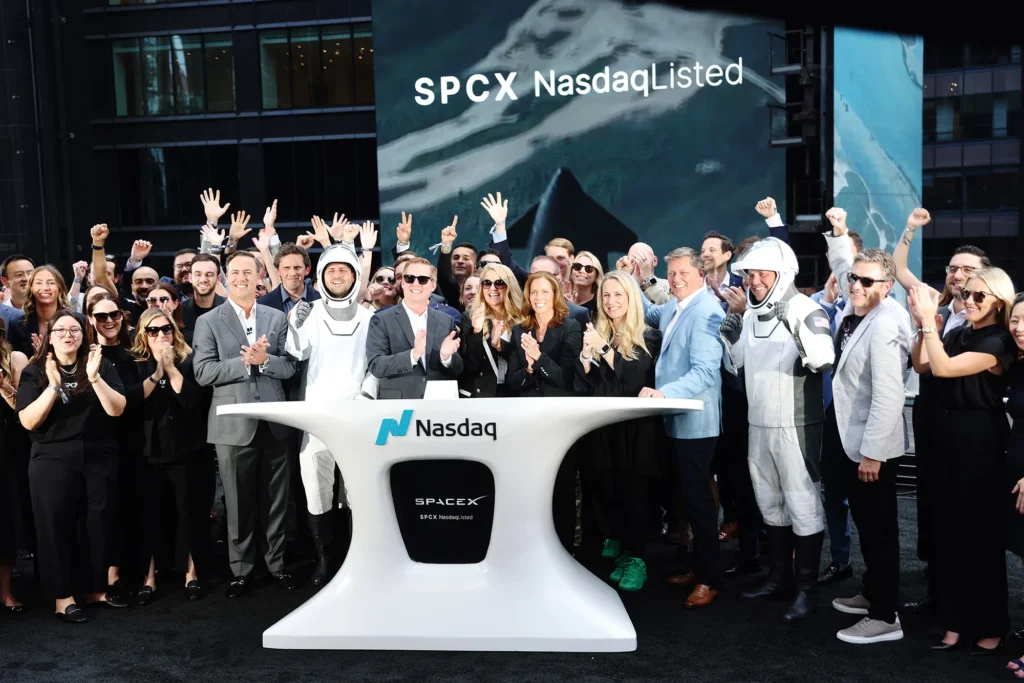
Elon Musk is officially the world’s first trillionaire after SpaceX debuted at $150 per share on June 13, 2026, 11% higher than the company’s IPO pricing of $135 per share. The milestone didn’t require a new invention or a merger. It required a public market to finally put a number on what Musk had already built.
As recently as the summer of 2024, Elon Musk, Jeff Bezos, and Bernard Arnault were swapping the title of world’s richest person on a near-daily basis, with net worths hovering around $200 billion. Now, not even two years later, Musk has amassed the world’s first trillion-dollar fortune — worth twice as much as Bezos and Arnault combined.
Here’s what makes that number hard to hold in your head. Only 19 countries have GDPs that surpass $1 trillion, ranging from the U.S. to the Netherlands, according to World Bank data. Musk’s personal wealth now rivals the annual economic output of nations.
Elon Musk’s Early Life: Where the First Trillionaire Came From
Elon Musk was born on June 28, 1971, in Pretoria, South Africa, to Maye Musk, a dietitian and model from Canada, and Errol Musk, a South African electromechanical engineer.
He wasn’t an obvious prodigy by conventional standards. His school years were difficult — he was introverted and often bullied. But he retreated into books. By age 10, he was teaching himself to code. At 12, he sold a video game called Blastar to a magazine — a piece of code he had written himself.
That early habit of solving problems nobody asked him to solve would define everything that followed.
- Born: June 28, 1971, Pretoria, South Africa
- Childhood interest: Computers, science fiction, self-taught programming
- First product sold: Blastar (a video game), age 12
- Departure from South Africa: Age 17, to Canada
At 17, to avoid compulsory military service in apartheid-era South Africa and to pursue better opportunities, Musk moved to Canada. He wasn’t running from anything, exactly. He was running toward something he hadn’t defined yet.
Education: Two Degrees and One Door Left Open at Stanford
Musk attended Queen’s University in Ontario for two years before transferring to the University of Pennsylvania, where he earned degrees in both physics and economics. Two degrees at one of the country’s top universities would have been enough for most people.
Musk enrolled in a PhD program at Stanford University in applied physics. He left after two days.
He moved to North America to pursue higher studies and greater opportunities, and his early interests in renewable energy, space exploration, and the internet later became the foundation of his companies. The PhD would have been the detour, not the main road.
Key education facts:
- Queen’s University, Kingston, Ontario — 1990–1992
- University of Pennsylvania — B.S. Physics, B.A. Economics (Wharton)
- Stanford University — Applied Physics PhD program, enrolled 1995, left after 2 days to start Zip2
Career Beginnings: From $22 Million to $1.1 Trillion
In 1995, Musk dropped out of his PhD program at Stanford after just two days, opting instead to dive into the world of internet startups. Alongside his brother Kimbal, he co-founded Zip2, a company that provided business directories and maps for newspapers. In 1999, Compaq acquired Zip2 for roughly $307 million — and Musk received $22 million from the sale.
He didn’t buy a house. He reinvested. That discipline — putting winnings back into the next bet — would become his most consistent trait.
Musk went on to co-found PayPal, an online payment system, which was sold to eBay for over $1 billion in 2002. By 31, he was already set for life. He chose not to be.
Career timeline:
- 1995 — Co-founds Zip2 with brother Kimbal
- 1999 — Zip2 sold to Compaq for ~$307 million
- 1999 — Founds X.com (online payments); merges with Confinity to become PayPal
- 2002 — eBay acquires PayPal for over $1 billion
- 2002 — Founds SpaceX with personal capital
- 2004 — Joins Tesla as chairman; becomes CEO in 2008
- 2022 — Acquires Twitter for $44 billion; renames it X
- 2025 — Leads Department of Government Efficiency (DOGE) under President Trump
- 2026 — SpaceX IPO makes him the world’s first trillionaire
Career Milestones: The Decisions That Built a Trillion-Dollar Empire
Biggest Career Milestone
SpaceX — rocket manufacturer, satellite internet service provider, AI firm, and owner of X (formerly Twitter) all rolled into one — priced its IPO at $135 per share, raising about $75 billion and setting a record for the biggest IPO in history. Musk’s 42% stake did the rest.
Before SpaceX, there was Tesla. For the 54-year-old Musk, the SpaceX offering came 16 years after he took Tesla public. Two public companies. One man. An outcome nobody modeled seriously until it happened.
What Sets Musk Apart From Every Other Billionaire
Most billionaires peak with one company. Musk runs several, simultaneously, and each one operates at the frontier of its industry. Tesla shareholders gave Musk his first path to trillionaire status when they approved a controversial pay package that could be worth as much as $1 trillion if the company reaches several ambitious benchmarks — yet it’s SpaceX that got him there much faster.
Which brings us to the pattern: Musk doesn’t optimize for the safest path. He optimizes for the most ambitious one, and then executes with enough precision to make it work anyway.
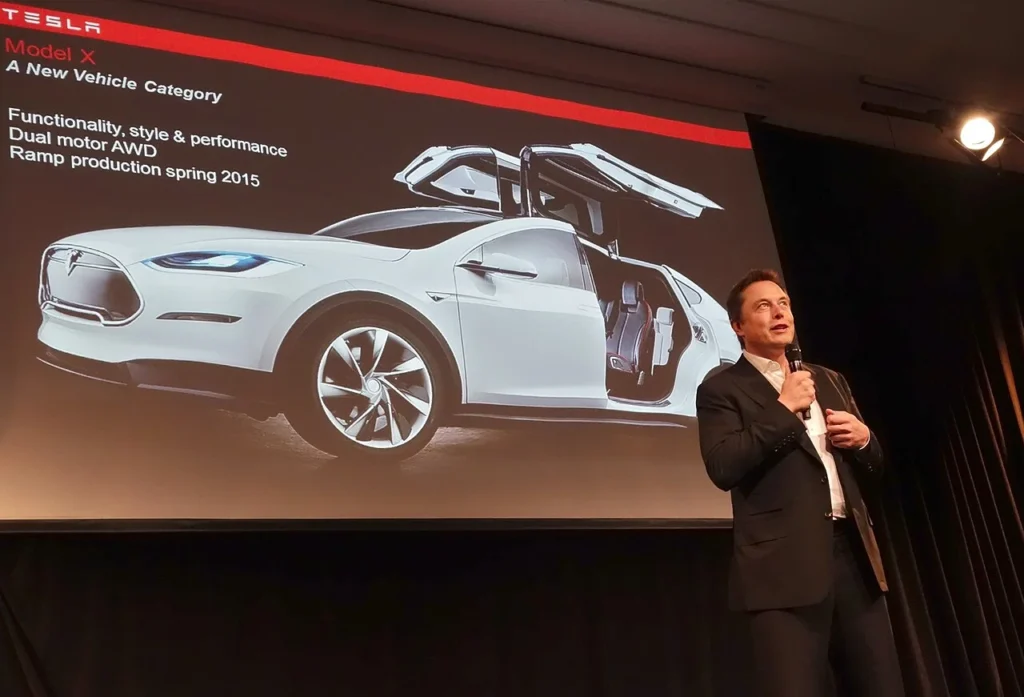
Steve Jurvetson from Los Altos, USA, CC BY 2.0 https://creativecommons.org/licenses/by/2.0, via Wikimedia Commons
The Unanswered Question
In 2025, SpaceX’s xAI segment — which includes X — posted a $6.36 billion operating loss on $3.2 billion in revenue. X generated about $1.8 billion in ad revenue in 2025 — less than half of the $4.5 billion in ad sales Twitter reported in 2021. No one has publicly confirmed how Musk plans to close that gap, or whether X will ever return to its pre-acquisition revenue levels. It remains the one hole in a trillion-dollar portfolio.
The SpaceX IPO: How Who Is the First Trillionaire in the World Got Its Answer
SpaceX began trading at a valuation of $1.77 trillion on the Nasdaq stock exchange, selling 555.6 million shares at $135 each. Estimates of Musk’s stake in the company ranged from $743 billion to $866.5 billion.
Before the IPO, Musk was worth an estimated $813 billion — a fortune more than twice as large as the planet’s second-richest person, Google co-founder Larry Page, who is worth an estimated $288 billion, according to Forbes.
Then the market opened. SpaceX began trading at $150 a share, above its listing price of $135 a share — making Musk the world’s first-ever trillionaire following the IPO.
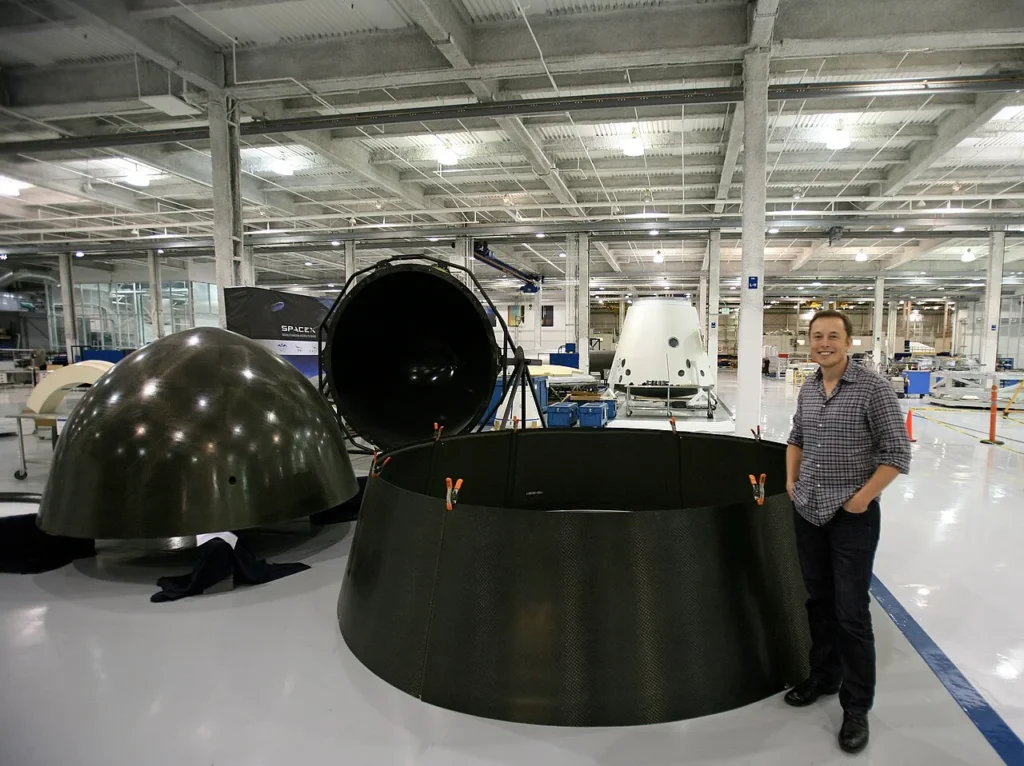
Steve Jurvetson from Menlo Park, USA, CC BY 2.0 https://creativecommons.org/licenses/by/2.0, via Wikimedia Commons
By the numbers:
- SpaceX IPO price: $135/share
- SpaceX opening price: $150/share
- SpaceX closing price (June 13): $160.95/share
- IPO capital raised: ~$75 billion (record-breaking)
- SpaceX valuation: ~$1.77 trillion
- Musk’s estimated net worth post-IPO: ~$1.1 trillion
Comparable Figures: Who Might Follow Musk Into Trillionaire Territory?
| Name | Known For | Why Comparable | Career Overlap |
|---|---|---|---|
| Jeff Bezos | Amazon founder | Former world’s richest person; multi-sector empire | E-commerce, space (Blue Origin) |
| Larry Ellison | Oracle co-founder | Tech billionaire with surging AI-era valuation | Enterprise software, cloud |
| Mark Zuckerberg | Meta CEO | Social media empire at AI frontier | AI, social platforms |
| Bernard Arnault | LVMH CEO | Former top-3 billionaire; luxury empire | Global brand portfolio |
| Jensen Huang | Nvidia CEO | AI hardware dominance driving net worth surge | AI infrastructure, semiconductors |
Personal Life: The Man Behind the Trillion
Beyond his professional life, Musk is a father to 14 children. His relationships have been well-documented and frequently reported on. He was married twice to British actress Talulah Riley (2010–12 and 2013–16), and previously married Justine Wilson from 2000 to 2008.
His current relationship status is not publicly confirmed as of June 2026. His living arrangement — primarily Starbase, Texas, near SpaceX’s launch facility — reflects a man who builds his life around his companies, not the other way around.
He has been public about his ambition to establish a human presence on Mars, framing it not as a business goal but as a species-level insurance policy. Whether that’s genuine conviction or brand mythology, it’s a question his biography raises without fully answering.
Philanthropy: What a Trillion-Dollar Fortune Means for Giving
Musk established the Musk Foundation, which has made documented grants focused on science education, renewable energy research, and pediatric health. The specific scale of recent giving is not confirmed in publicly available financial disclosures as of mid-2026. No verified reporting from major news organizations documents a significant philanthropic commitment relative to his current net worth — an observation critics have made publicly, citing inequality reporting by Oxfam.
Oxfam America senior director of economic justice Nabil Ahmed described Musk’s rise to trillionaire status as “a new pinnacle of oligarchy,” calling it emblematic of a “new Gilded Age” of wealth inequality.
Controversies: The Cost of Operating at This Scale
No profile of who is the first trillionaire in the world is complete without this chapter.
Musk generated significant controversy for his closeness to President Donald Trump, contributing a quarter of a billion dollars to help Trump get elected in 2024, according to verified reporting. He led the Department of Government Efficiency (DOGE) through the early months of Trump’s second term.
Musk said in a December 2025 interview that while he was proud of what he accomplished at DOGE, it would have been better if he had avoided the controversy and focused on his companies — noting that “the cars wouldn’t have been burning,” referring to attacks on Tesla vehicles during anti-Musk protests.
Musk wielded unprecedented power helping the Trump administration reshape and, in some cases, dismantle federal agencies across the government, and his legal adversaries have since sought to depose him on his role at DOGE — though courts have repeatedly paused those demands.
On January 20, 2025, while speaking at a rally celebrating Trump’s second inauguration, Musk twice made a salute interpreted by many as a Nazi or fascist gesture. It was widely condemned in Germany, and American public opinion remained divided on partisan lines as to whether it was a fascist salute.
These controversies aren’t footnotes. They’re part of the Musk story — inseparable from the companies, the fortune, and the question of what this much power in one person’s hands actually means.
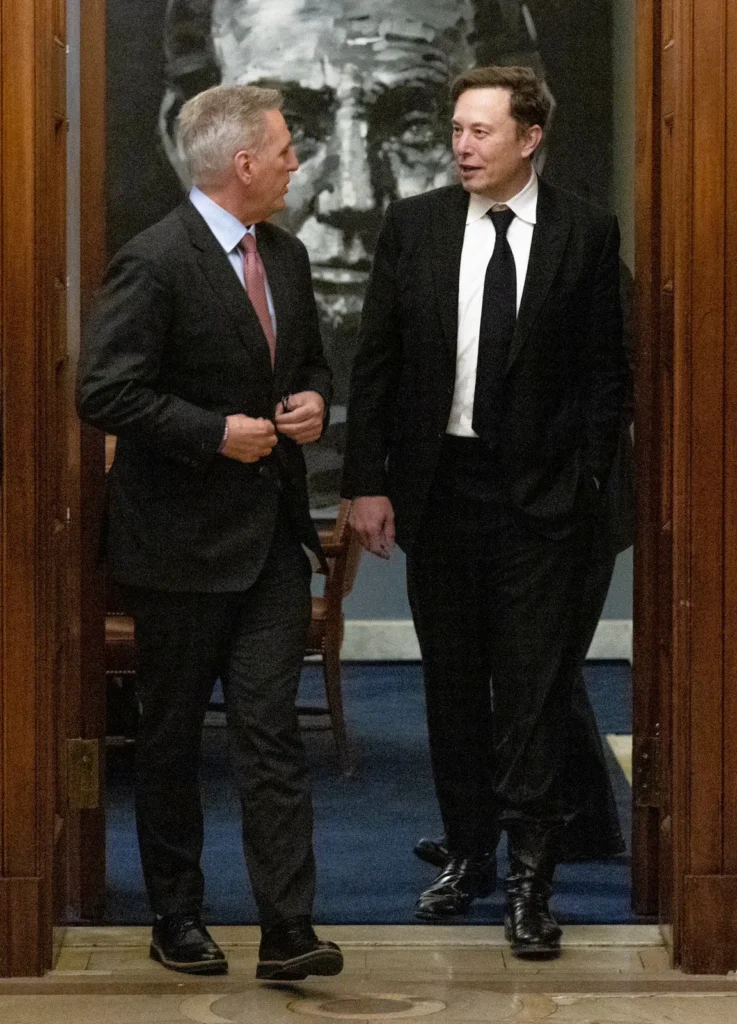
Office of the Speaker of the House of Representatives, Public domain, via Wikimedia Commons
Legacy and Impact: What the World’s First Trillionaire Actually Changed
History is useful here. John Jacob Astor, Andrew Carnegie, John D. Rockefeller — each era produces a figure whose wealth seems to defy comprehension. John Jacob Astor was worth between $20 million and $30 million, or roughly 1% of U.S. GDP, when he died in 1848, according to the MeasuringWorth Foundation.
Musk’s fortune, relative to today’s global GDP, is smaller by that measure. But the industries he’s touched are not.
Electric vehicles went from a niche market to a mainstream product category during Tesla’s rise. Private spaceflight went from government monopoly to competitive industry during SpaceX’s rise. And in 2026, Musk’s net worth hit a number that economists once used as a thought experiment.
With $1 trillion, Musk has about $200 billion more than NASA has spent since its inception in 1958. He could cover the space agency’s 2025 budget of $24.6 billion with less than 3% of his net worth.
Whether that concentration of resources in one person accelerates progress or distorts it is the defining question his story leaves open.
Conclusion: The Answer Was Always Going to Be Complicated
As of June 2026, Elon Musk is the confirmed answer to who is the first trillionaire in the world — and the story of how he got there is equal parts ambition, engineering, capital, controversy, and timing. The SpaceX IPO didn’t create his empire. It just put a public price on it.
What happens next depends on markets, politics, and a man who has consistently defied the forecasts made about him — in both directions.
Also Read: Who Is the Senator of NY? Chuck Schumer and Kirsten Gillibrand
Frequently Asked Questions About the First Trillionaire in the World
Who is the first trillionaire in the world?
Elon Musk became the first person in history to cross the trillionaire threshold when SpaceX priced its blockbuster IPO at $135 a share and its stock soared in its market debut on June 13, 2026. His net worth reached approximately $1.1 trillion following the IPO.
How did Elon Musk become the world’s first trillionaire?
The SpaceX IPO valued the rocket and satellite company at roughly $1.77 trillion, pushing Musk’s net worth to about $1.1 trillion. Combined with his holdings in Tesla and other assets, this made him the first trillionaire on paper.
How old is Elon Musk?
Elon Musk was born on June 28, 1971. He is 54 years old as of June 2026.
Where is Elon Musk from?
Elon Musk was born in Pretoria, South Africa. He moved to Canada at 17 before later settling in the United States, where he became a U.S. citizen in 2002.
What companies does the first trillionaire in the world own?
Musk is CEO of SpaceX and Tesla. He also owns X (formerly Twitter), which he acquired for $44 billion in 2022. He co-founded the AI company xAI, which has since merged with SpaceX’s operations.
Was Elon Musk always expected to become the first trillionaire?
Not at this speed. A 2024 Informa Connect Academy report put Musk’s wealth growth at an average rate of 110% per year, flagging him as the clear candidate to reach $1 trillion — but projected it happening by 2027. The SpaceX IPO moved that timeline up by over a year.
What is Elon Musk’s net worth in 2026?
As of Friday, June 13, 2026, Musk’s net worth had reached an estimated $1.1 trillion, per Forbes. Net worth figures based on publicly traded stock will fluctuate with market conditions.
Who might become the second trillionaire?
Oxfam predicts there will be four other billionaires who will become trillionaires after Musk — Amazon’s Jeff Bezos, Oracle’s Larry Ellison, Meta Platforms CEO Mark Zuckerberg, and LVMH CEO Bernard Arnault. No confirmed timeline exists for any of them.
Featured Image: Gage Skidmore, CC BY-SA 3.0 https://creativecommons.org/licenses/by-sa/3.0, via Wikimedia Commons
